
Addiction Awareness & Recovery Guide – NO SHAME
Addiction is a complex health condition—not a choice or a failure. This guide is created with the NO SHAME spirit: to help you understand addictive substances, recognize causes, explore treatment, and support yourself or loved ones on the path to recovery.
Is addiction a disease?
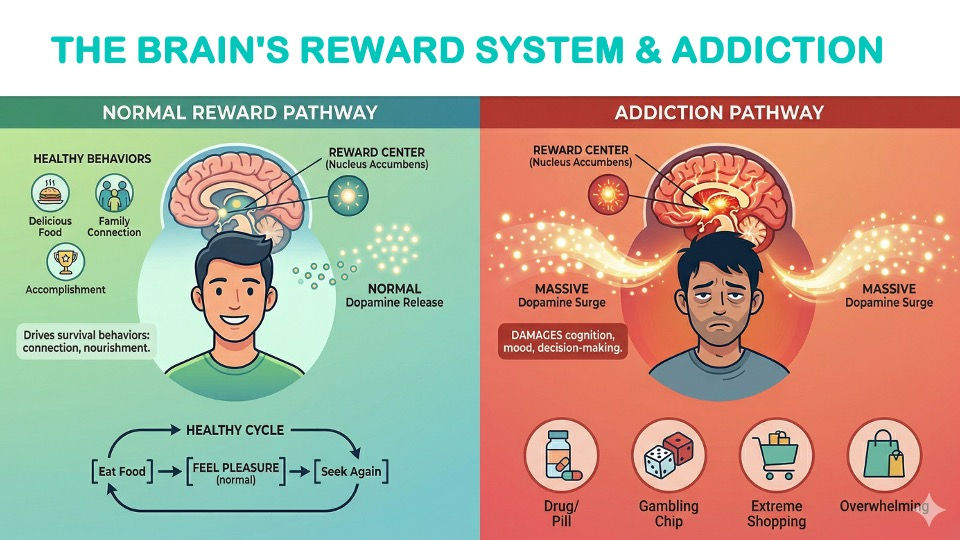
Yes, addiction is a disease. The American Society of Addiction Medicine (ASAM) defines addiction as a chronic brain disorder.

Substance Addictions
Substances can be prescription medications or non-medical drugs or alcohol and include many things you are probably familiar with.

Alcohol
Tobacco/nicotine
Caffeine
Cannabis (marijuana)
Hallucinogens, such as PCP and LSD
Hypnotics, sedatives and anxiolytics (anti-anxiety drugs), such as sleeping pills, benzodiazepines and barbiturates
Inhalants, such as paint thinners, aerosol sprays, gases and nitrites (poppers)
Prescription and non-prescription opioids, such as codeine, oxycodone and heroin
Prescription and non-prescription stimulants, such as Adderall®, cocaine and methamphetamine
Use of these substances can lead to substance use disorders (SUDs) — but NOT always. SUDs can be mild, moderate or severe. Addiction is the most severe form of a SUD.

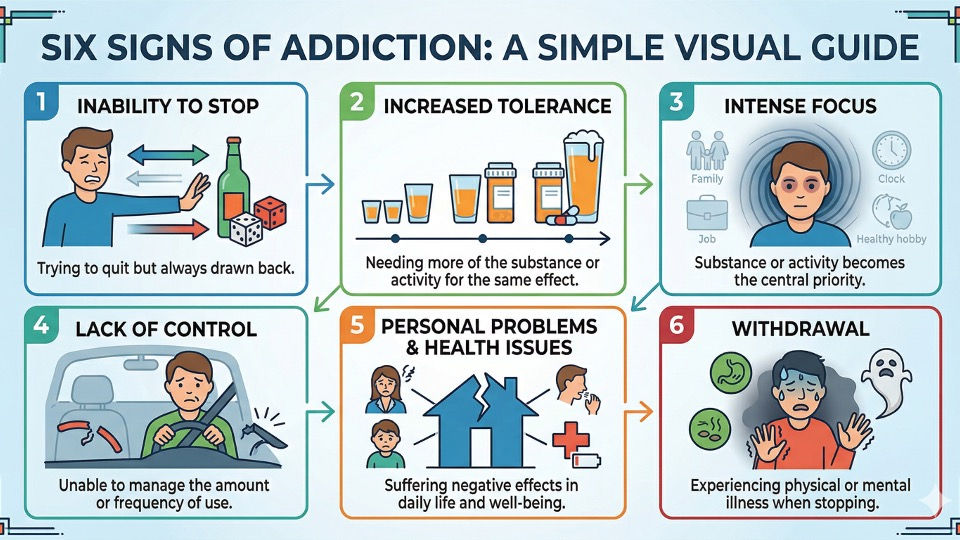
Signs Of Addiction
Symptoms of addiction vary from person to person based on the substance or the activity.
Causes Of Addiction
• Genetics: Studies show that genetic factors are responsible for 40% to 60% of the vulnerability to any SUD. If you have a first-degree relative (biological sibling or parent) with a substance abuse disorder, you’re more likely to develop one. Scientists are working to locate specific genes that may contribute to this vulnerability.
• Mental health conditions: There’s a strong link between addiction and mental health conditions, such as depression, PTSD and bipolar disorder. About half of the people who experience a mental health condition will also experience a substance abuse disorder SUD and vice versa.
• Environmental factors: Access to substances is a particularly significant environmental risk factor. Factors include substance use by household or peers, misuse‑prone prescriptions, and adverse childhood experiences (ACEs). ACEs are strongly related to addiction and lifelong health problems.
Treatment Options
• Hospital management: Certain substances can create dangerous withdrawal. Special hospital units provide monitoring and care during withdrawal.
• Medications: Certain medications can reduce urges, cravings and withdrawal symptoms. Mental health conditions (bipolar, depression) may also be treated with medication.
• Rehabilitation (rehab): Also called “sober living” or residential treatment. Offers structured counseling, education, support. Inpatient (live‑in) or outpatient (visit sessions). Focuses on long‑term recovery.
• Therapy: Includes cognitive behavioral therapy, group therapy to gain new perspectives and change behavior.
• Support groups: Such as Alcoholics Anonymous ( AA), Narcotics Anonymous (NA), Al‑Anon (for families). Share experiences and provide ongoing support.
12 Steps of AA / NA
Step 1: Honesty
Step 2: Faith
Step 3: Surrender
Step 4: Soul Searching
Step 5: Integrity
Step 6: Acceptance
Step 7: Humility
Step 8: Willingness
Step 9: Forgiveness
Step 10: Maintenance
Step 11: Making Contact
Step 12: Service
Steps for Reducing the Risk of Developing Addiction
• Avoid or limit addictive substances: Follow prescription rules; contact a provider if dependent.
• Know your family history: Higher vulnerability with family SUD; discuss risk reduction with a doctor.
• Manage stress healthily: Use exercise, meditation, hobbies; seek mental health support if needed.
Tips to Help Yourself / Loved One
• Speak up sooner rather than later: Earlier treatment = better outcomes. Help find help without judgment.
• Practice empathy: Listen thoughtfully; build trust.
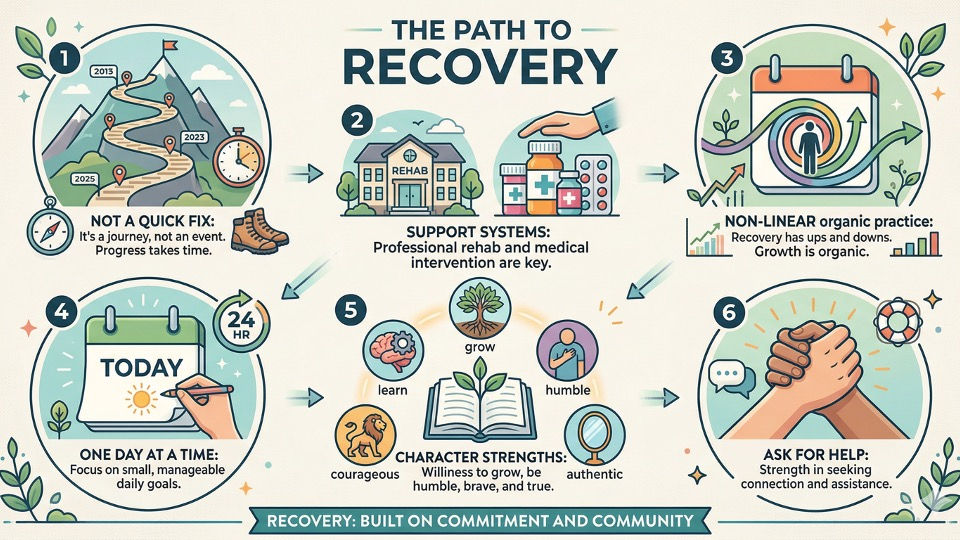
• Be patient: Addiction is a chronic condition with no quick fix.
• Take care of yourself: Families often feel stress/grief; prioritize your mental health.

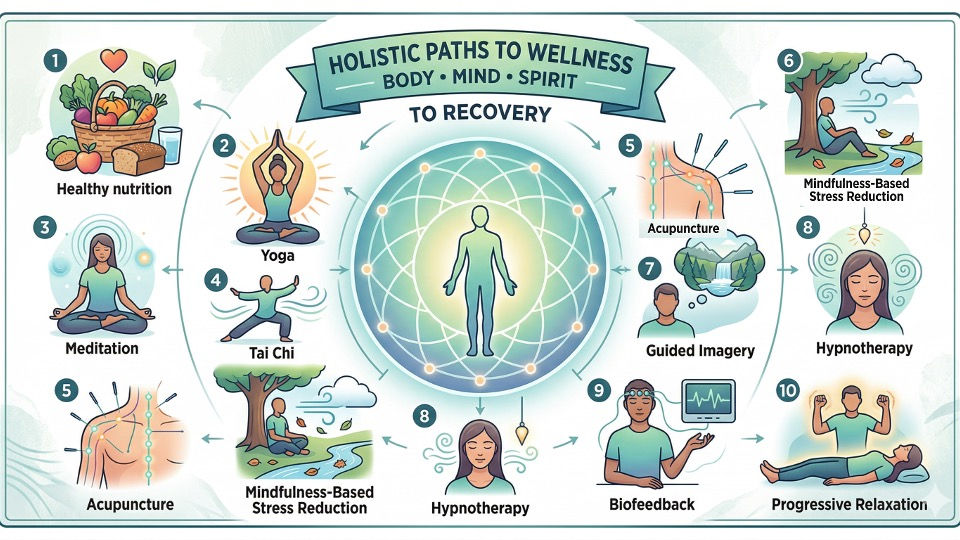
Paths to Wellness (Body, Mind, Spirit)
Addiction affects everyone close to the addict. Changed attitudes can aid recovery.
Paths to Recovery
Recovery is possible, and you are not alone.
By learning the facts, acting early, and supporting each other without judgment, we can reduce stigma, prevent harm, and build healthier, hopeful lives.
Resources
DrugFree.org: Nation’s leading organization for addiction prevention and treatment.
Mirmont Treatment Center: 100 Yearsley Mill Road, Media, PA 19063 | 800 846 4656
Caron Treatment Center
Unity Java (Philadelphia area): Employs people in recovery; community‑focused, living wage, fair‑trade coffee.


Comments